

MICA Art Space Website Design
Content Strategy • Information Architecture • Digital Experience Design • Brand Storytelling • 2019
Designing a digital platform that connects exhibitions, venue rental services, and cultural programming into a cohesive online experience while supporting brand growth and venue bookings.
Role
Website Designer
Information Architect
Content Strategist
Timeline
2019
Responsibilities
Content Strategy
Information Architecture
Digital Storytelling
Brand Experience
Tools
Google Form, Balsamiq, Squarespace

Project Overview
MICA Art Space is an independent cultural venue that hosts exhibitions, workshops, performances, and community events.
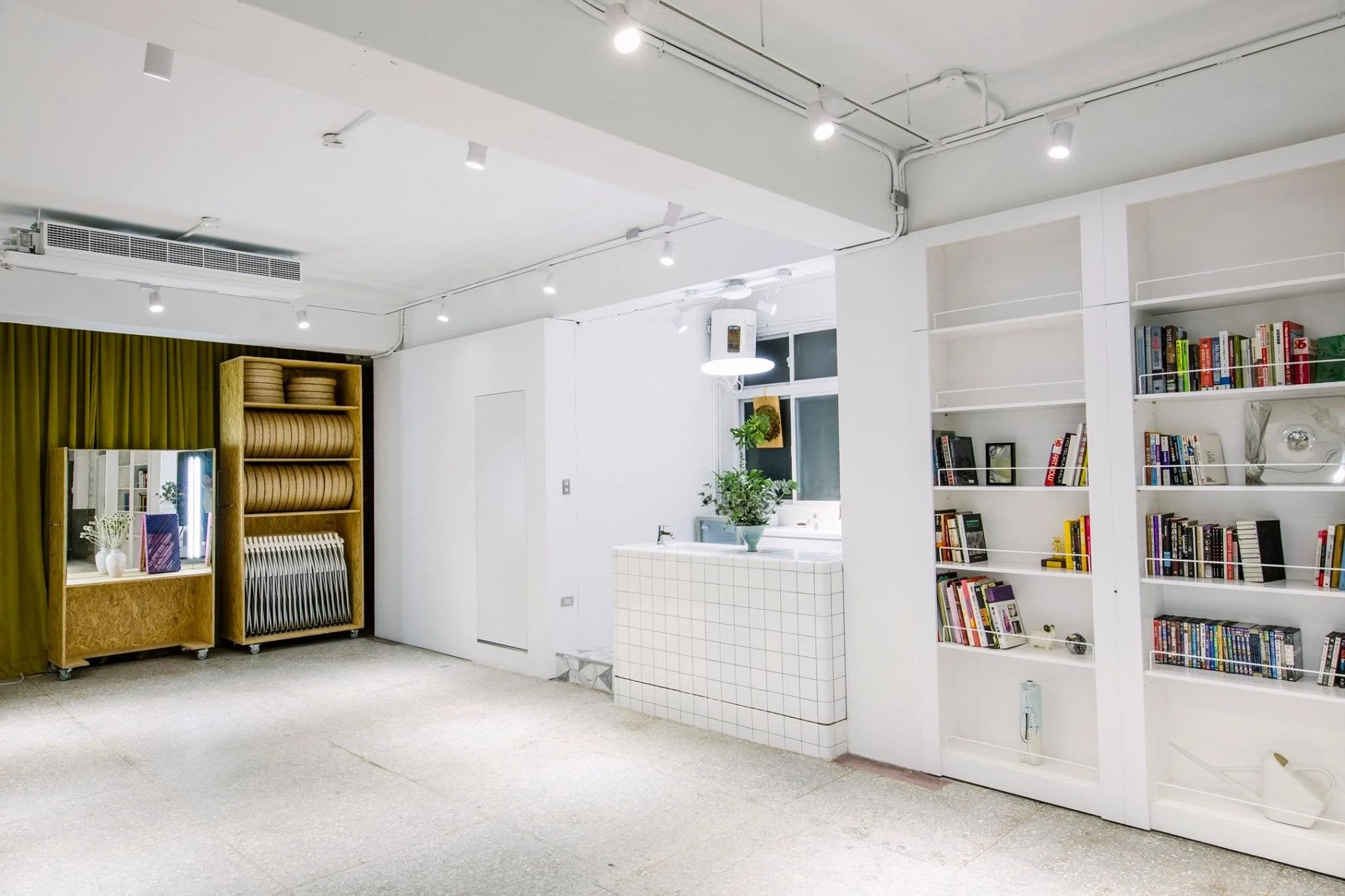
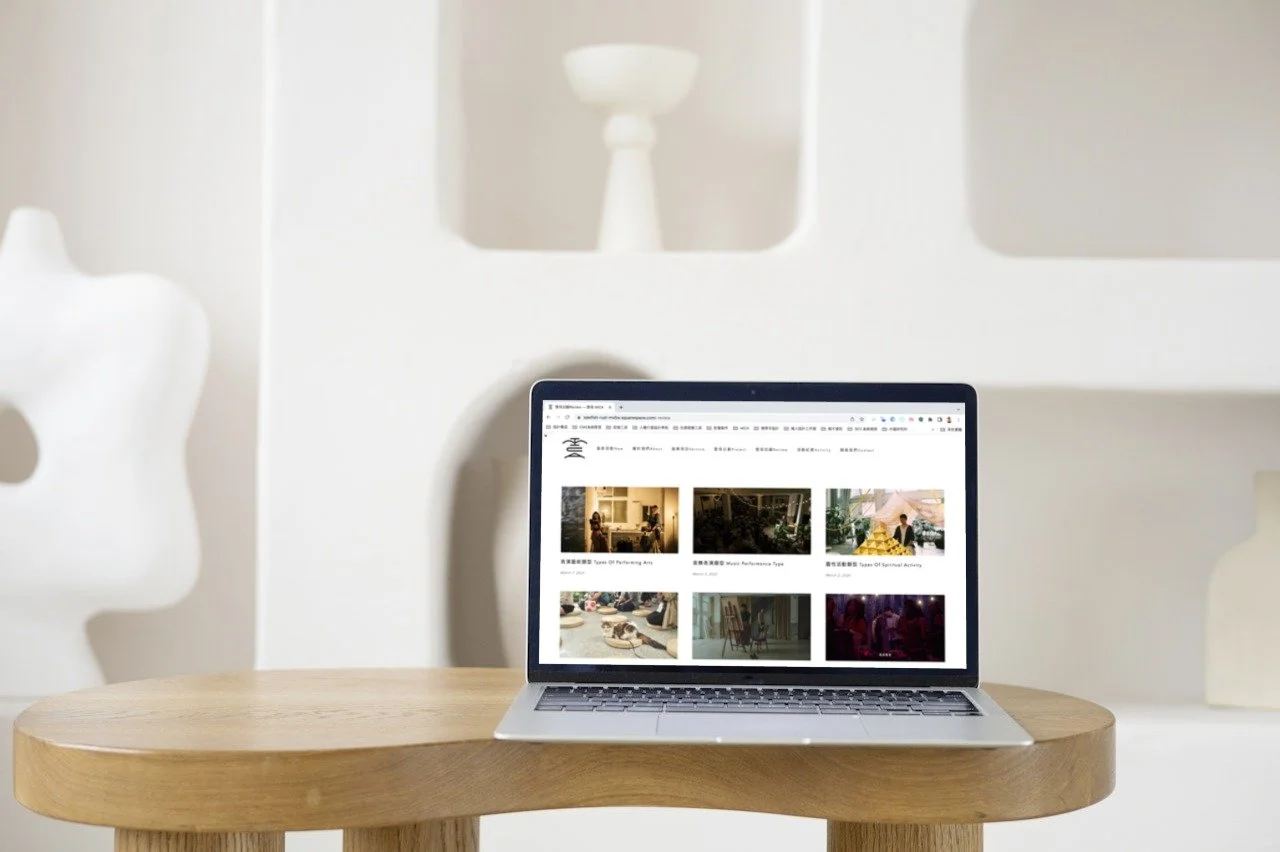
As a newly established cultural organization, MICA needed a digital presence that could showcase the beauty of its physical space, increase brand visibility, and attract potential visitors and venue rental clients.
My role was to organize content, restructure information architecture, and design a website experience that balanced cultural storytelling with practical business goals.
Beyond promoting exhibitions and venue rental services, the website was designed to document community activities and cultural programs, gradually building a growing archive of digital assets that reflect MICA’s openness, diversity, and evolving brand identity.
Business Challenge
As MICA expanded its exhibitions, venue rental services, and community programs, website content became scattered across disconnected pages.
Visitors often struggled to distinguish between cultural programs, rental services, and organizational information, making key content difficult to discover.
The challenge was to create a scalable information architecture that could support multiple audience needs while preserving MICA's cultural identity.
#1
Improve content discoverability by creating a clearer information structure.
#2
Help visitors quickly understand MICA's services, events, and cultural programs.
#3
Strengthen brand communication while supporting practical user tasks.
#4
Build a flexible content system that could accommodate future growth.
Design Goals
Information Architecture & Content Strategy
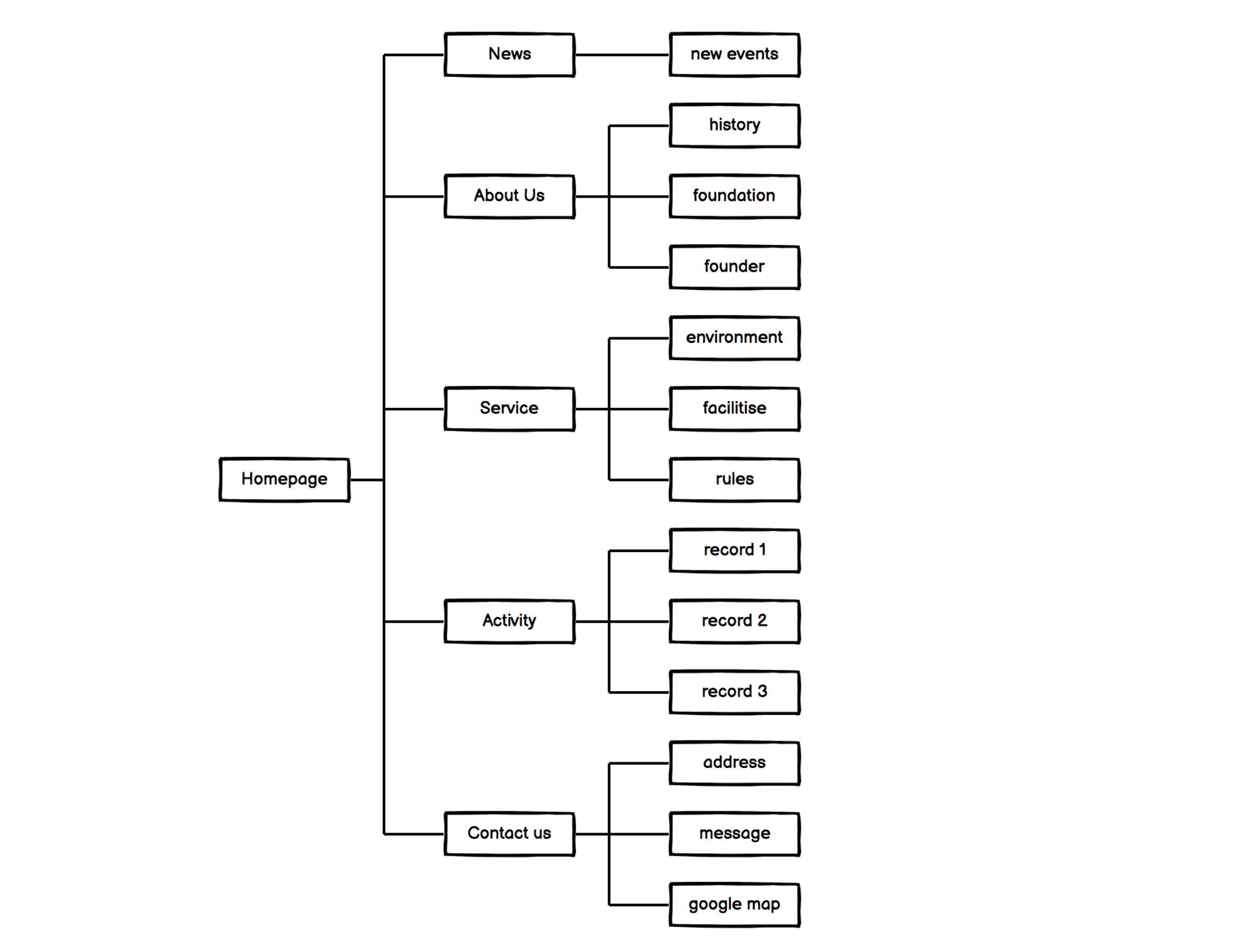
To simplify navigation and improve content discoverability, I reorganized the website into several primary content areas:
• Venue Rental
• Events & Activities
• Cultural Projects
• About MICA
Each section was designed around a specific user need while maintaining consistent relationships across the overall website structure.
Content hierarchy was also refined to improve readability, reduce navigation complexity, and make key information easier to access.
The resulting structure provided a more sustainable foundation for future content expansion and content management.
Design Solutions
Solution 1: Simplify Website Navigation
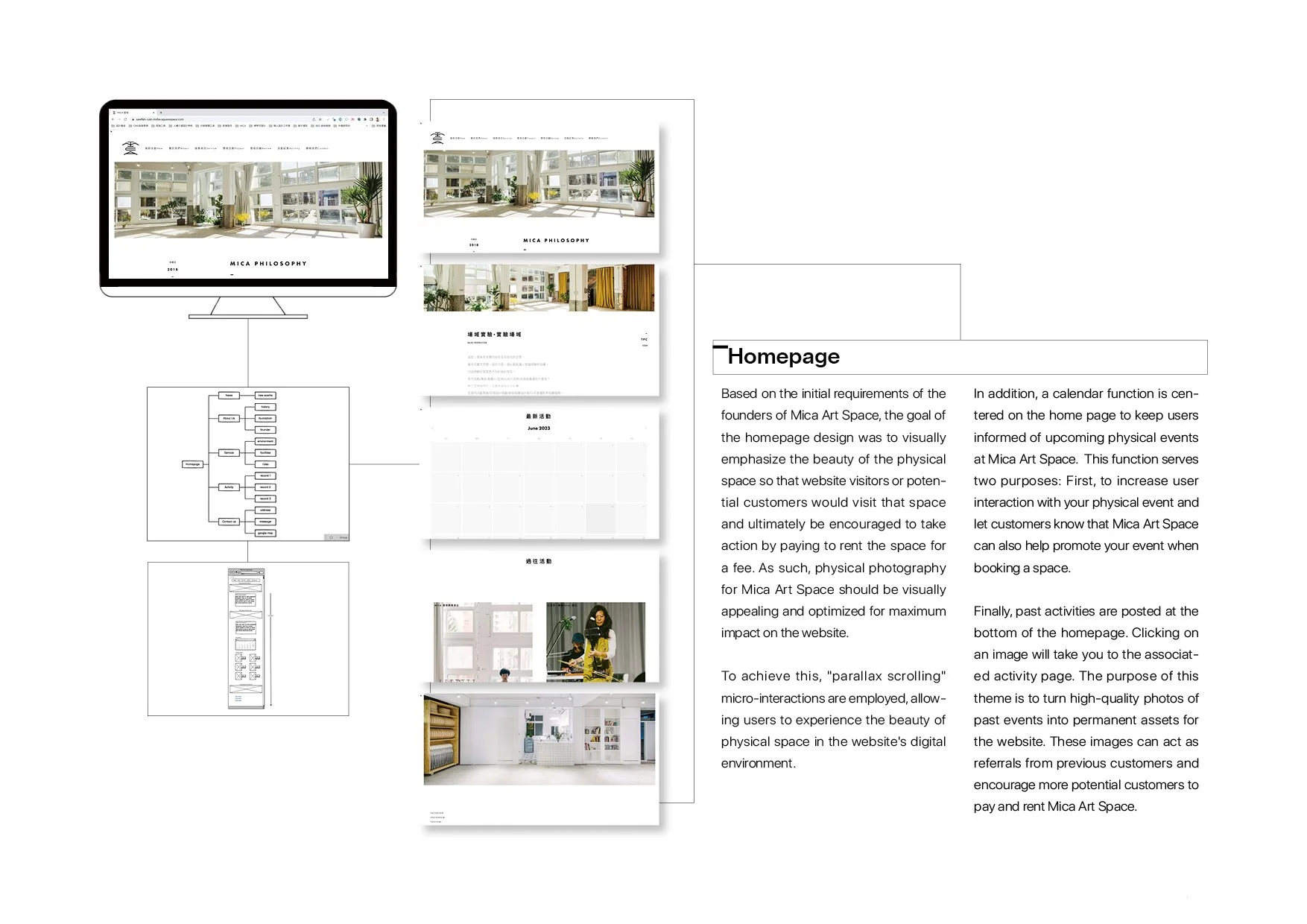
The navigation structure was reorganized to create clearer relationships between content categories and reduce information overload.
Users can now identify key sections more quickly and understand how different services and programs connect within the organization.
Solution 2: Improve Content Hierarchy
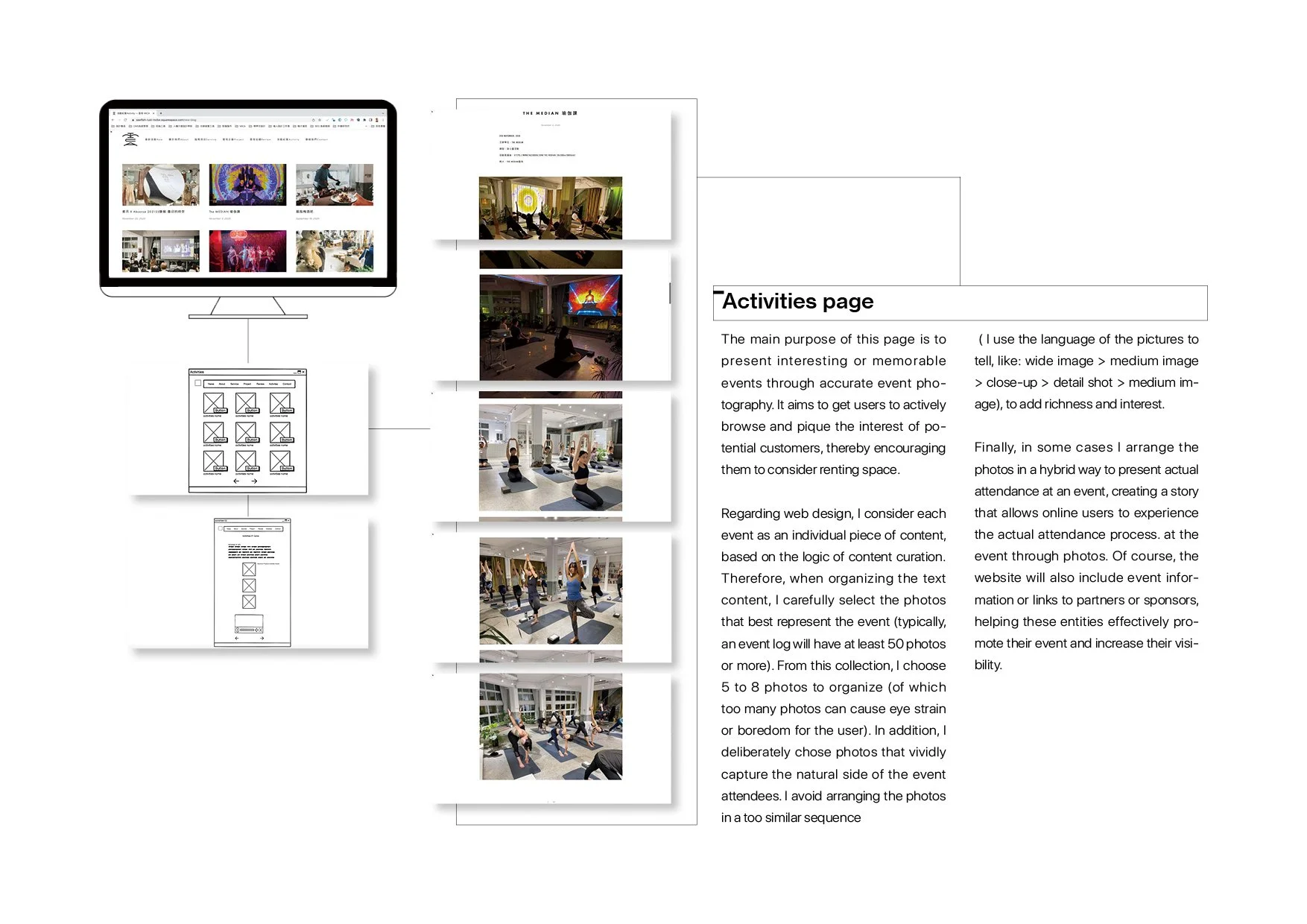
Page layouts were redesigned to prioritize important information and improve scanning behavior.
Clear visual grouping, stronger hierarchy, and improved spacing help visitors locate relevant content with less effort.
Solution 3: Clarify Venue Rental Information
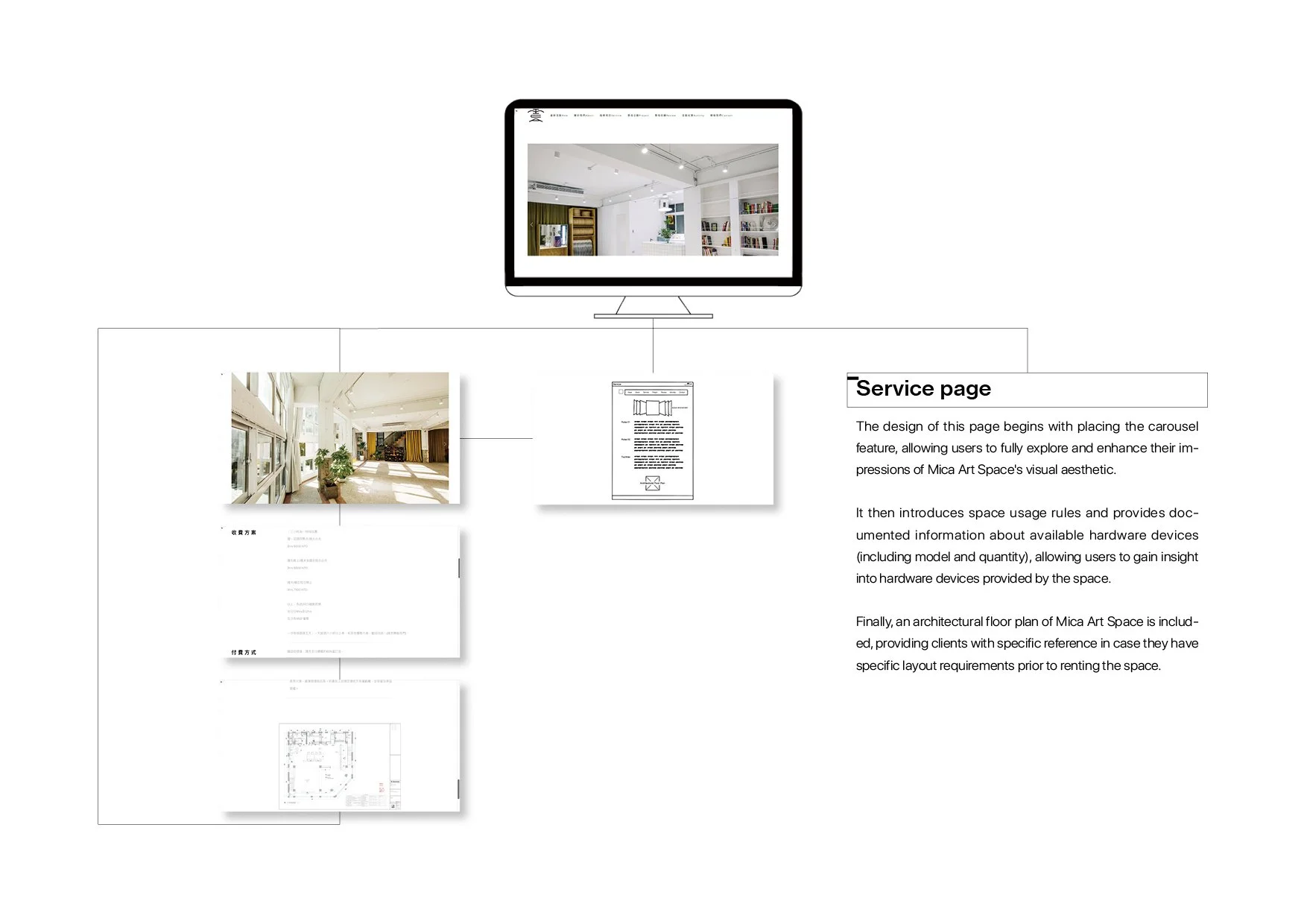
Rental-related content was consolidated into dedicated service pages with clearer organization.
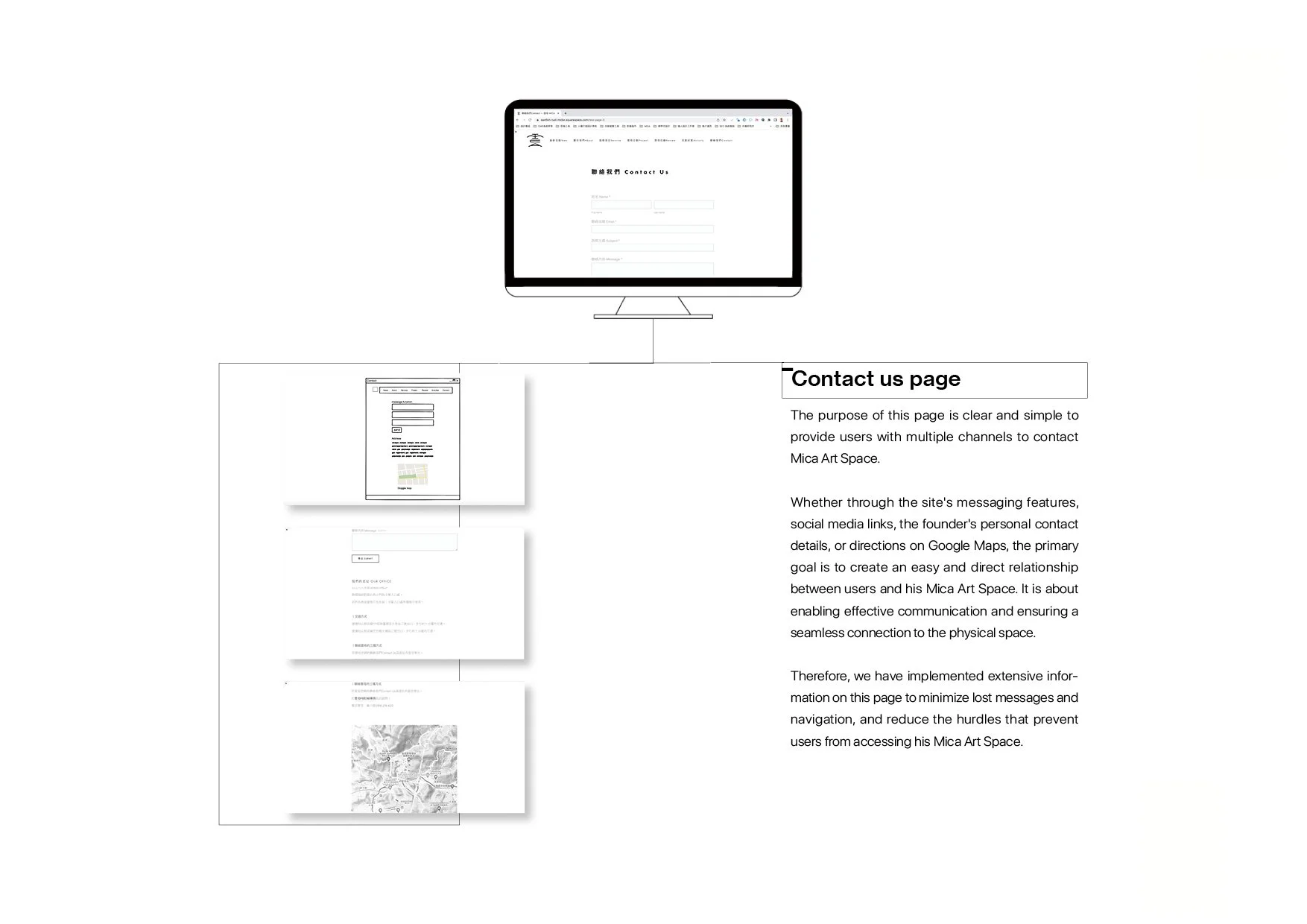
Information such as venue features, usage scenarios, rental details, and contact information became easier to understand and navigate.
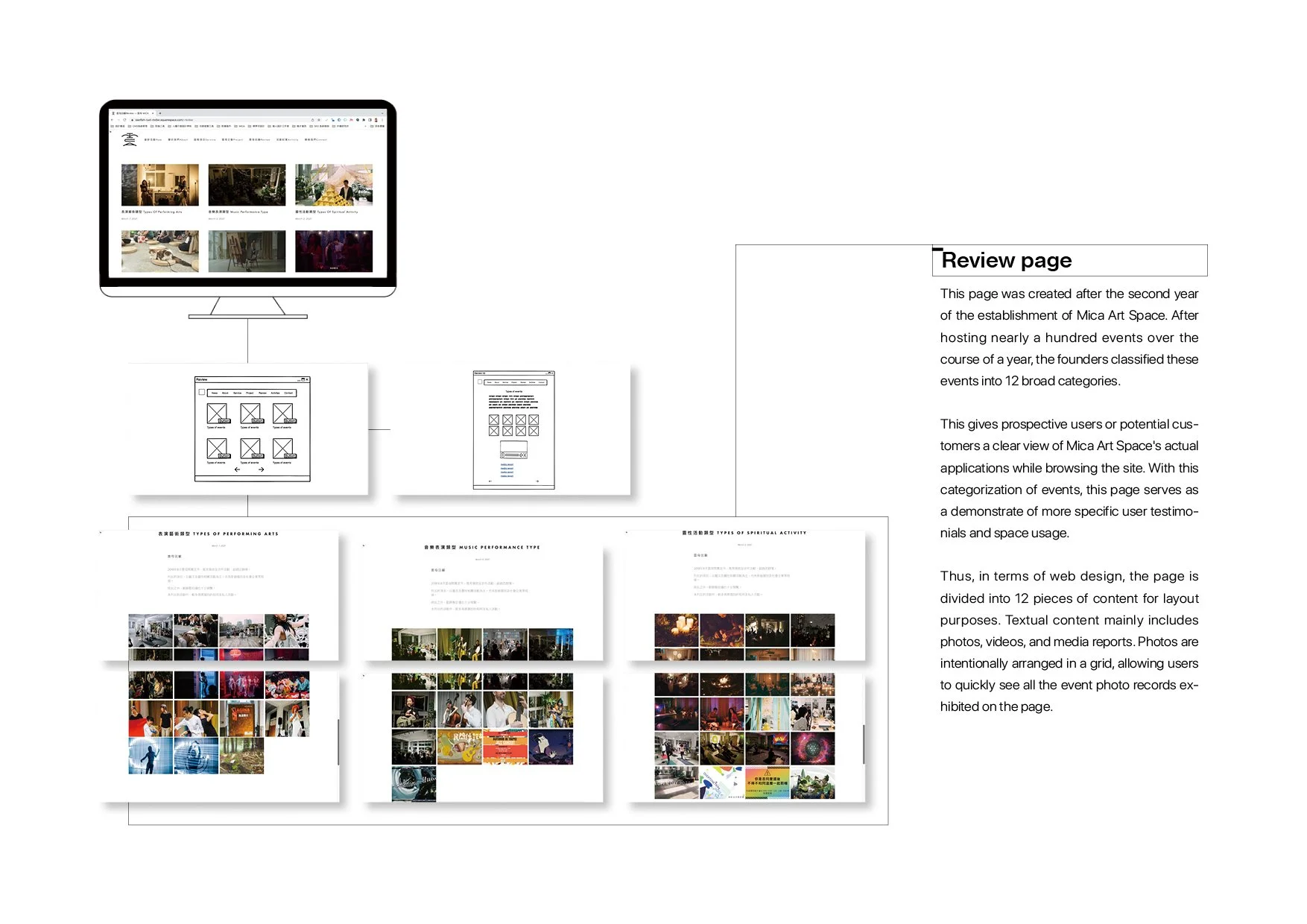
Solution 4: Strengthen Event and Project Visibility
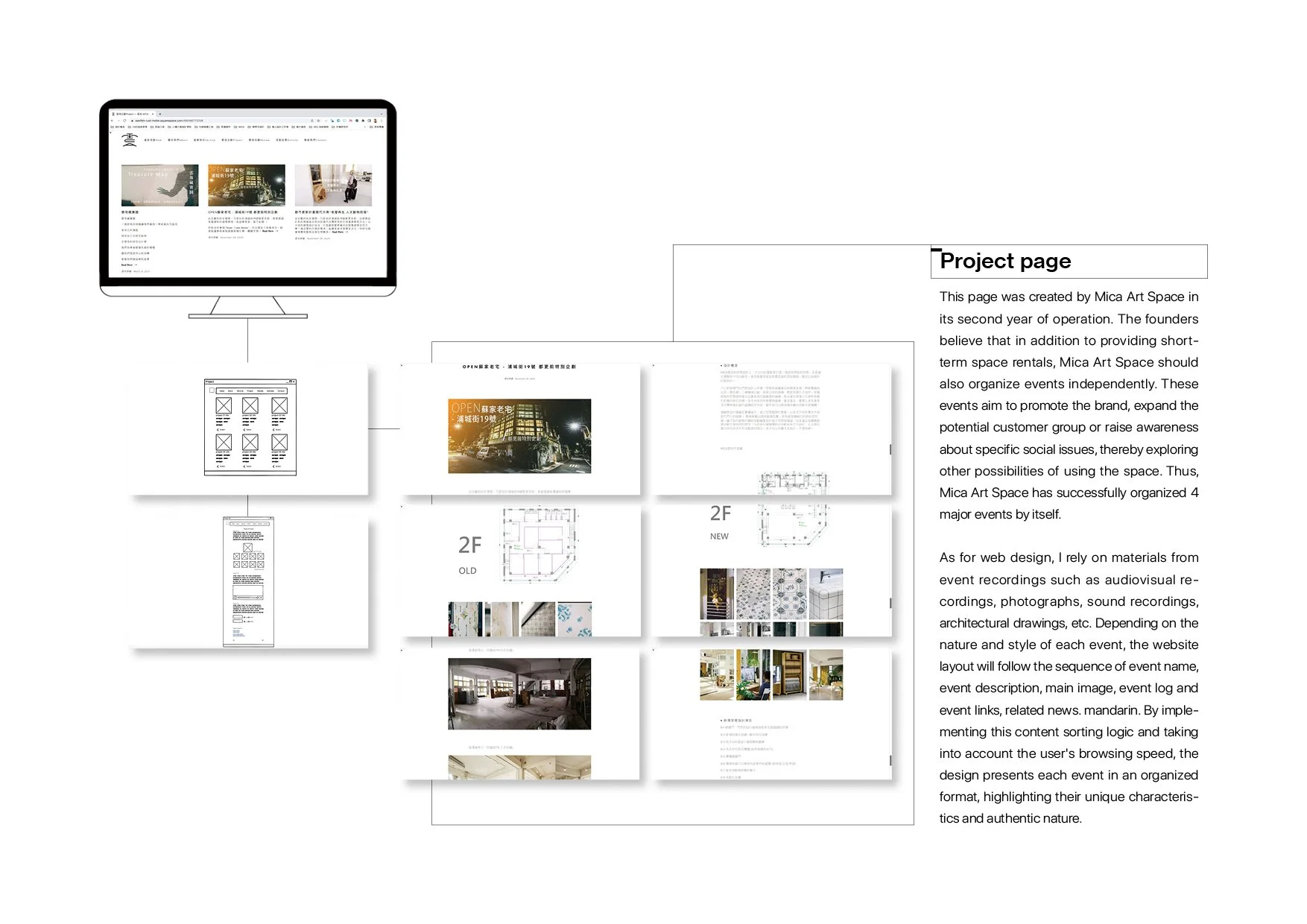
Events, exhibitions, and cultural programs were given dedicated content structures that better showcase MICA's activities while supporting long-term content discoverability.
Outcome & Impact
The redesign established a clearer information architecture that supports both cultural storytelling and practical service communication.
Beyond improving content organization, the website became an important platform for showcasing MICA's physical venue, cultural programs, and rental services to broader audiences.
Over time, event documentation, photography, and video archives evolved into valuable digital assets that strengthened MICA's brand presence while preserving its diverse and inclusive cultural activities.
The project created a scalable foundation for future content growth, ongoing website management, and long-term brand storytelling.
20%
Estimated increase in venue inquiries
30+
Cultural projects documented online
100+
Community events and activities archived
Reflection & Takeaways
This project taught me that effective website design is not only about visual presentation, but also about organizing content in ways that support business goals, user needs, and brand storytelling simultaneously.
Rather than focusing solely on visual design, I learned how content organization, hierarchy, and navigation structures influence the way people understand and interact with information.
Working on a real-world cultural organization also strengthened my ability to balance business goals, brand communication, and usability considerations within a single digital experience.
The experience further developed my skills in content strategy, website structure planning, and translating organizational needs into user-centered design decisions.
Selected highlights from the project are presented here.
For deeper research insights, UX decisions, and design iterations, view the full case study below.